
Best Barstools for Heavy Use in Hospitality

Updated: Jun 4
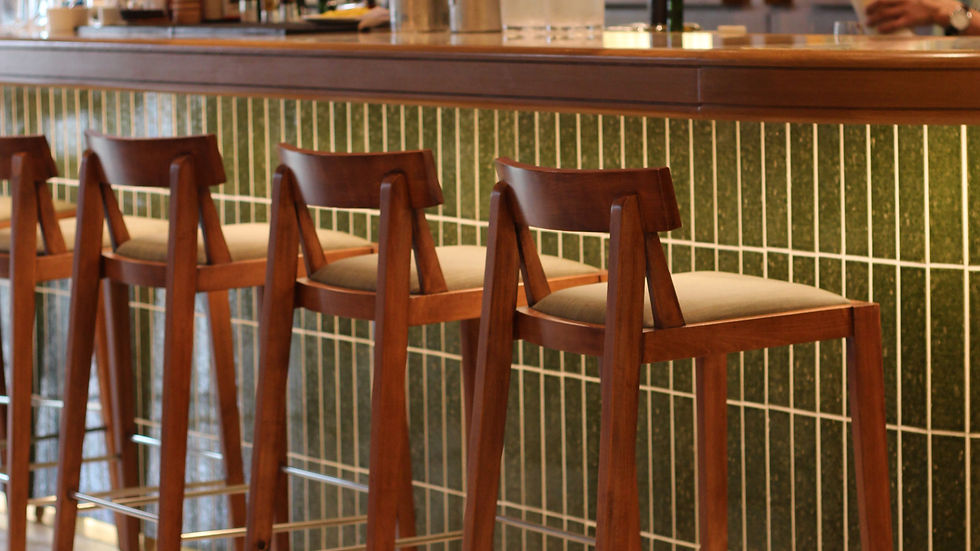
A barstool that looks right on opening day can become a maintenance problem within months if it is specified for style rather than service. When operators ask for the best bar stools for heavy use, the real question is not which model looks strongest in a catalogue. It is which stool will keep performing through constant turnover, spills, cleaning cycles and daily movement without creating avoidable replacement costs.
In hospitality, bar stools work harder than most seating. Guests lean back on two legs, bags catch on frames, footrests take repeated impact, and cleaning teams wipe every surface far more often than in residential settings. That is why commercial buyers need to assess bar stools as operational assets, not decorative add-ons.
What makes the best barstools for heavy use?
The best-performing stools usually get the basics right before anything else. Frame strength, joinery, weight balance and surface durability matter more than trend-led details. A stool can have the right silhouette for a bar counter, but if the welds are weak or the timber joints loosen under pressure, appearance stops being relevant very quickly.
For high-traffic venues, metal frames are often the most dependable choice, particularly in bars, quick-service environments and food courts where usage is continuous and furniture is moved frequently. Powder-coated steel and aluminium can both perform well, but the coating quality matters. A poor finish chips early, especially around footrests and seat edges.
Solid timber stools also have a place, particularly in cafés, bistros and premium hospitality settings where warmth is part of the concept.
The trade-off is that timber requires careful specification.
Hardwood construction, reinforced joints and a finish suited to repeated cleaning are essential.
Lightweight decorative timber stools may suit domestic use, but they rarely hold up under commercial strain.
Seat construction is another point buyers sometimes underestimate. Upholstered seats can improve comfort and dwell time, but in heavy-use settings they also introduce cleaning and wear variables. A well-made upholstered stool with commercial-grade fabric or vinyl can work well in managed indoor environments. In very high-turnover spaces, however, a shaped polypropylene or timber seat is often the lower-risk option.
Match the stool to the venue, not just the counter
There is no single answer to the best bar stools for heavy use because usage patterns differ across hospitality formats. A cocktail bar, a breakfast café and a QSR all stress furniture in different ways.
In bars and late-night venues, stools need to cope with heavier movement, longer sitting periods and higher impact on footrests. Stability becomes especially important here. Guests shift weight more aggressively, and stools are often dragged rather than lifted. A broader footprint and a well-engineered frame generally outperform narrow, lightweight designs.
In cafés and casual dining environments, the priority is often a balance between comfort, visual appeal and efficient maintenance. Customers may sit for moderate periods, but staff still need to clean quickly and reset tables without obstruction. Backrests can be worthwhile in these spaces, especially where bar-height communal tables are used for working lunches or coffee meetings.
For QSRs and food courts, speed of cleaning and resistance to constant handling usually take priority over softness or extended sitting comfort. Simpler surfaces, stackable or easy-to-move models, and finishes that tolerate frequent wiping are typically the better commercial decision.
Key specification points buyers should not skip
Load capacity is an obvious starting point, but it should not be treated as the only marker of durability. A stool may carry weight statically yet still fail under repetitive use if the frame flexes or fixings loosen. Commercial testing standards, construction detail and supplier quality control matter just as much as the stated limit.
Footrests deserve close attention. They are one of the first parts to show wear because they absorb repeated shoe contact all day. On heavy-use stools, the footrest should feel integrated into the frame rather than added as an afterthought. If it is thin, poorly welded or placed awkwardly, damage tends to show early.
Glides and floor compatibility are also practical concerns.
On tiled surfaces, the wrong glide can lead to scraping, instability or excessive noise.
In hospitality, that creates both maintenance issues and a poorer guest experience.
Matching the stool base to the flooring specification helps reduce wear on both the furniture and the site.
Seat height needs similar care. Many bar stool problems are not structural failures but poor ergonomic fit. If the seat is too low or too high for the counter, guests shift awkwardly, lean on weak points and put more stress on the stool. As a rule, there should be comfortable leg clearance without forcing a cramped sitting posture.
Materials and finishes that work in practice

The strongest specification is often the one that reflects the real cleaning regime of the venue. If the operations team uses frequent sanitising products, the finish must tolerate that routine without fading, peeling or becoming tacky over time.
Powder-coated metal is widely used for a reason. It offers a clean commercial look, handles regular maintenance well and can suit a wide range of concepts, from industrial to contemporary casual dining. Not all powder coating is equal, though. In lower-quality applications, chipping around stress points can appear sooner than expected.
Timber brings a more elevated appearance, but it should be sealed properly and detailed for hospitality use. Open-grain or lightly protected surfaces may look appealing initially, yet they can absorb stains and show wear quickly in busy operations. Where timber is part of the concept, engineered durability is essential.
Polypropylene and moulded plastic seats often perform well in high-volume settings because they are easy to clean and resistant to many forms of daily wear. The limitation is perception. In premium venues, they may not align with the intended guest experience unless paired with a refined frame and considered colour palette.
Upholstery should be selected with discipline. Commercial vinyls and treated fabrics can be practical, particularly in indoor bars and lounges, but stitched detailing, deep tufting and light colours increase maintenance pressure. The more complex the upholstery, the more demanding the upkeep.
Design still matters, but it should support operations
Commercial buyers do not need to choose between durability and aesthetics. They do, however, need to avoid designs that look distinctive at the expense of service life. Fine metal rods, delicate joinery and highly detailed silhouettes can create avoidable weak points.
The better approach is to define the visual direction first, then specify a stool engineered to support it. A modern industrial space may call for black metal and dark timber. A premium café may require upholstered backs and warm finishes. A food court may benefit from clean, repeatable forms that are easy to standardise across units. In each case, the stool should strengthen the concept while still being easy to maintain, replace and replicate if the site expands.
This is where a total furniture solutions approach adds value. Instead of selecting stools in isolation, buyers can align seating with counters, tables, traffic flow, flooring and brand standards from the start. That reduces mismatches and helps ensure consistency across one outlet or many.
Procurement mistakes that become expensive later
One common mistake is buying purely on unit price. A lower upfront cost can look attractive during fit-out, but if stools require early repair or replacement, the lifecycle cost rises quickly. For multi-site operators, inconsistency in quality also creates procurement and maintenance complications later.
Another mistake is underestimating lead time and replacement planning. Heavy-use venues should consider whether matching stools will still be available in future, especially for rollouts or phased refurbishments. Standardisation helps protect both the design scheme and operational continuity.
It is also risky to specify bar stools without thinking about after-sales support. Hospitality furniture does not operate in a vacuum. Repairs, touch-ups and replacement parts can all affect the real value of a supply partner. For operators who need speed and peace of mind, service capability matters as much as the product itself.
A practical way to choose well
The most reliable buying process starts with the venue type, expected traffic, cleaning routine and target lifespan. From there, frame material, seat construction, finish and comfort level can be narrowed down with a commercial lens.
Ask how the stool will be used at 9 am, at 3 pm and at closing time.
Will guests stay for ten minutes or two hours?
Will staff move stools constantly?
Will the site serve alcohol late into the evening?
Will the furniture need to match a rollout standard?
These questions usually lead to a better answer than browsing by appearance alone.
For hospitality operators, the best choice is rarely the most eye-catching stool in the room. It is the one that supports daily service, protects the look of the venue and keeps replacement pressure under control. When the specification is right, bar stools stop being a recurring problem and become part of a fit-out that simply works.


Comments