
What Can an Oil Palm Trunk Become? Rethinking Materials for F&B Spaces

What if an oil palm trunk could become part of the spaces we design next?
At ARCHIDEX 2026, we explored how wellness, sustainability and material innovation can shape better spaces.
One material that became part of that conversation was OnCore® by IOI Palm Wood — transforming oil palm trunks from Malaysia's replanting cycle into PalmCore panels developed for furniture and interior applications.
For architects and designers, it presents a different way to think about an existing resource — not simply as something left behind, but as a material with new design possibilities.
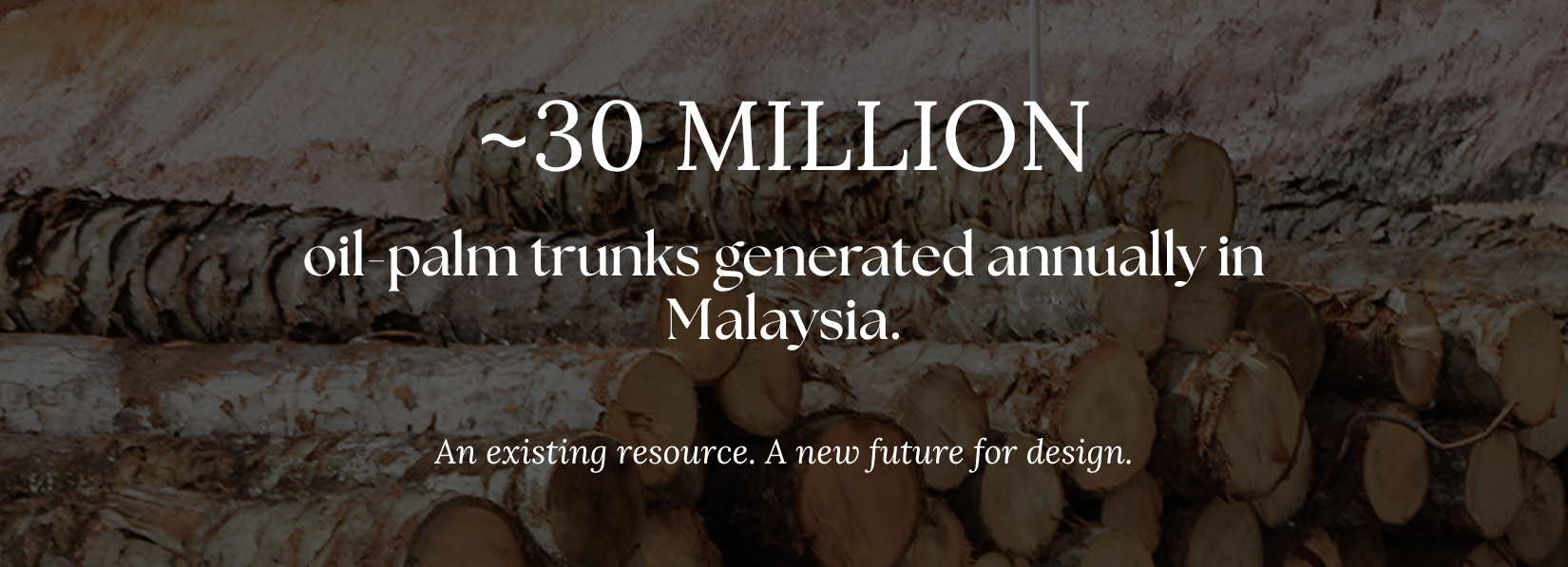
A Waste Stream. Reimagined.
Malaysia's oil palm plantations undergo a regular replanting cycle, typically every 20–25 years, generating an estimated 30 million oil palm trunks annually. Traditionally, these trunks are left to decompose in the fields.
OnCore® takes a different approach.
Through advanced processing, these oil palm trunks are transformed into PalmCore panels for furniture and interior applications — giving an existing resource a new purpose.
From Oil Palm Trunks to PalmCore
The transformation involves a series of processes including log preparation, thermal modification, canter chipper operation and panel manufacturing before reaching finished furniture applications.

By making use of oil palm trunks already generated through the replanting cycle, OnCore® offers another way of thinking about material resources — one that gives existing oil palm trunks a new purpose while reducing reliance on conventional timber resources.
Why Consider OnCore® for Your Next Project?
More Than a Sustainability Story. A Material You Can Design With.
Material selection isn't only about where a material comes from. It is also about what it can contribute to a space.
According to the OnCore® material documentation, PalmCore is lightweight yet durable, with natural thermal and acoustic insulation and fire-retardant properties without heavy chemicals. It is also manufactured with No Added Formaldehyde (NAF), supporting better indoor air quality.
For architects and designers, that brings together four important considerations:
Responsible Material Use — Giving oil palm trunks from the replanting cycle a new purpose.
Performance — Lightweight yet durable, with thermal, acoustic and fire-retardant characteristics.
Indoor Wellbeing — No Added Formaldehyde (NAF), supporting better indoor air quality.
Design Possibilities — PalmCore panels can be developed across different furniture and interior applications.

What Could We Design With It?
The OnCore® collection demonstrates PalmCore across furniture applications including cabinetry, benches, tables, workstations and modular seating.
For BAREKA, the opportunity is to explore how this material can translate into the F&B environment — from tables and seating to counters, cabinetry and other interior furniture applications, depending on each project's requirements.
For the architect, it brings another material into the sustainability conversation. For the designer, it opens new possibilities beyond conventional timber specifications. And for the client, it creates a sustainability story that can become part of the physical space.
Because responsible design shouldn't stop at the drawing board.
Designed with Responsibility. Built with Assurance.
Material innovation also needs to be supported by confidence in the processes behind it. OnCore® products and processes are supported by SIRIM ECO 086:2024 and BSI-certified management systems including ISO 9001, ISO 14001 and ISO 45001.
These recognised standards support OnCore®'s commitment to quality, environmental management and workplace safety.
The Conversation Continues
ARCHIDEX 2026 may be over, but the conversation around better material choices continues.
At BAREKA by Kian, we're exploring how materials like OnCore® PalmCore can contribute to F&B spaces that balance design, performance, people and more responsible material choices.
From oil palm trunks to PalmCore.
From material to furniture.
From furniture to better spaces.


Comments