
Biophilic Restaurant Design Trends That Work

Updated: Oct 8
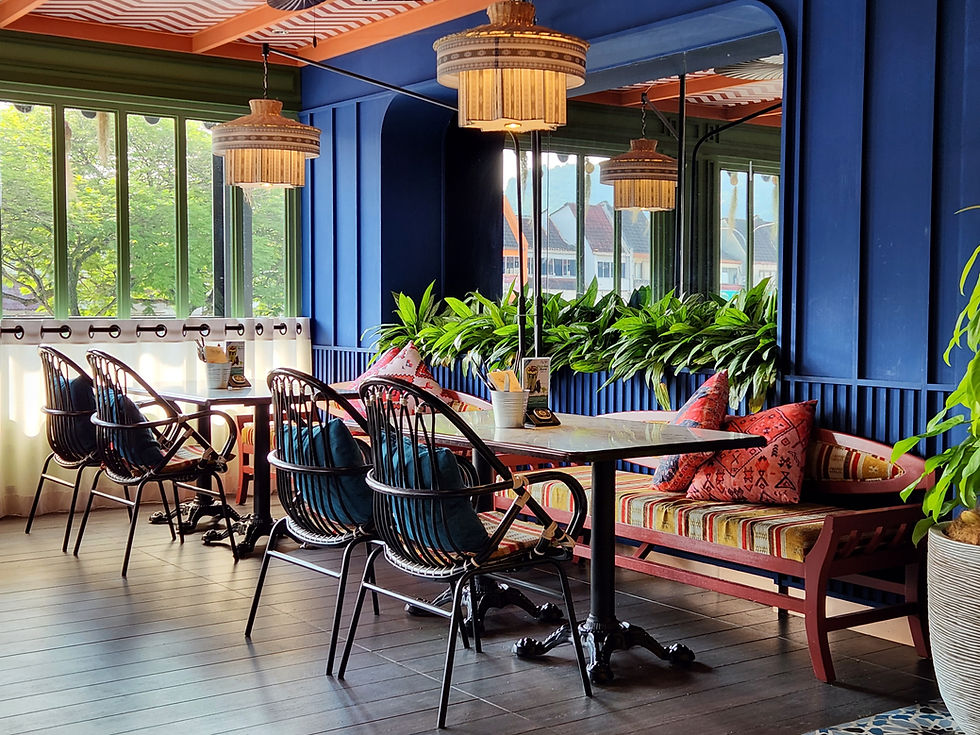
A planting wall may attract attention on opening day, but it will not by itself make a venue feel connected to nature. The most effective biophilic restaurant design trends use natural cues across the whole customer journey: arrival, waiting, ordering, dining and departure. For operators, the opportunity is not simply a more attractive interior. It is a space that feels calmer, more distinctive and more comfortable to return to, while remaining practical for cleaning, service and daily wear.
For restaurants, cafés, bars and food courts, biophilic design works best when it is planned as part of the fit-out specification. Furniture, finishes, lighting and circulation must support the concept together. A scheme that looks natural but creates awkward table layouts, difficult maintenance or inconsistent finishes across branches will quickly lose commercial value.
What Biophilic Restaurant Design Means in Practice
Biophilic design brings natural elements, patterns and sensory experiences into interior spaces to help people feel more at ease.
Beyond living plants, it can include:
Natural materials: Timber, stone-like surfaces and woven textures
Greenery: Indoor plants and planted features
Natural lighting: Daylight and views of the outdoors
Organic forms: Curved furniture and nature-inspired shapes
Natural textures: Water-inspired finishes and earthy details
In hospitality, these elements can create a calmer and more welcoming environment, especially in busy restaurants and compact cafés. They also help operators build a distinctive identity.
However, biophilic design is not about filling every corner with plants. Different venues have different needs:
Quick-service restaurants: Clear queues and fast table turnover
Bars: Intimate seating and softer lighting
Food courts: Durable furniture and easy maintenance
The right approach depends on the operating model, customer dwell time and maintenance capacity.

The Biophilic Restaurant Design Trends Shaping F&B Spaces
Natural materials with hospitality-grade performance
The strongest current direction is towards materials that look honest and tactile without being fragile. Light and mid-tone timber, woven textures, rattan-inspired details, stone-effect tabletops and earthy upholstery give guests an immediate visual connection to nature. However, commercial specification matters more than appearance alone.
Solid timber may suit a premium dining room, but it can mark, move and require regular care. Timber-look compact laminate, veneer with an appropriate protective finish, or quality coated metal can provide a similar visual language with better resistance to spills and high-volume cleaning. Tabletops should be selected for stain resistance, edge durability and repairability, not only for their first impression in a showroom.
The same approach applies to upholstery. Bouclé and heavily textured fabrics may look inviting, yet they are not always suitable around open food service or family dining. Performance vinyls, treated textiles and removable cushions can deliver warmth while helping operations teams maintain hygiene standards.
Greenery designed as part of the layout

Greenery is becoming part of restaurant layouts rather than an afterthought. Instead of placing decorative pots around the venue, operators can integrate planting into:
Partitions and dividers
Banquette backs
Entrance features
Ceiling installations
Planted screens can create quieter dining zones without solid barriers, while greenery near counters can soften the transition between ordering and seating areas.
In food courts, overhead planting or well-placed planters can help create a stronger sense of place without major architectural changes. However, live plants require proper maintenance. Consider lighting, watering, drainage, pest control and replacement access before installation.
For enclosed malls or hard-to-reach areas, high-quality artificial planting may be more practical. Combining it with genuine natural materials helps maintain a convincing nature-inspired atmosphere.
Organic furniture forms and softer zoning
Straight rows of tables remain practical, especially for quick-service restaurants. However, curved edges, rounded chairs and varied seating heights can soften the space and create better visual flow.
Curved banquettes are particularly useful for making use of corners, supporting group dining and defining zones without permanent partitions. However, fixed seating offers less flexibility than loose furniture. For venues that regularly change layouts, a mix of fixed banquettes and movable tables and chairs is often more practical.
Furniture should also support daily operations. Consider:
Comfort: Suitable for the intended dining duration
Weight: Easy for staff to move during cleaning
Base design: Allows easy floor access
Maintenance: Simple to clean, repair or replace
In high-turnover venues, the best-looking chair may not be the best choice if it is difficult to maintain or replace.
Daylight, warm lighting and visual rhythm
Natural light remains one of the most effective biophilic tools, but it must be controlled. Large glazed frontages can make a café feel open and inviting, while also introducing glare, heat gain and fading risks for fabrics. Blinds, planting, screens and furniture placement should work together to manage these issues.
Where daylight is limited, lighting can reinforce a nature-led scheme.
Consider combining:
Ambient lighting: Creates a welcoming atmosphere
Task lighting: Supports dining and service activities
Accent lighting: Highlights planting and interior features
Lighting also needs to suit the brand format. Bright, clear lighting may be correct for a busy lunch-led QSR, whereas a cocktail bar may use lower ambient light with focused accents. Biophilic design should support the atmosphere a venue needs, not impose one aesthetic across every concept.
Local character over generic "urban jungle" styling
A more mature biophilic approach draws on local context. This may mean a restrained tropical planting palette for a warm-climate setting, regional craft references, locally familiar timber tones or colour palettes taken from the surrounding landscape. The result feels more authentic than a standard mix of neon signs, dark walls and dense artificial leaves.
For restaurant groups, maintaining consistency across outlets remains important. A repeatable furniture and material system can include:
Consistent chair and table ranges
Standard material palettes
Coordinated signage
Flexible planting and decorative features
This approach helps maintain brand recognition while allowing each location to feel distinctive.
Turning the Trend into a Deliverable Fit-Out
The success of a biophilic scheme is decided early, when concept decisions are translated into specifications. A clear brief should identify the venue type, capacity target, expected dwell time, cleaning routine, budget and brand standards. These practical inputs determine whether a natural material or furniture form is appropriate.
Start by mapping:
Customer and staff routes
Queue and ordering areas
Table clearances
Accessible seating
Service and collection points
Then assess how natural finishes and greenery can improve each zone. An entrance may need a durable, high-impact feature; a dining area may benefit from acoustic softening and warmer seating; a collection point may require finishes that withstand frequent contact and cleaning.
Procurement should be treated as part of design quality. Matching materials from different suppliers can create colour variation, inconsistent lead times and gaps in accountability. Working with a specialist hospitality partner such as BAREKA by Kian helps operators coordinate furniture specification, design input and implementation through one structured process. This is particularly valuable when a concept must be repeated across several locations with the same visual standards and operational requirements.
Maintenance should also be designed in, not added at handover. Confirm who will care for live plants, which cleaning products are safe for each finish, how spare chairs or tabletops will be sourced, and whether upholstery components can be repaired rather than replaced. Natural-looking interiors retain their appeal only when they continue to look cared for.
Choose Meaningful Nature, Not More Nature
The best biophilic restaurant interiors complement the food, service and brand rather than compete with them. A well-placed planted partition, durable timber-look table range and warm layered lighting may create more value than an expensive feature wall that is difficult to maintain.
For F&B operators, the priority is choosing natural elements that improve the guest experience while supporting cleaning, service, durability and long-term operations. When these elements work together, biophilic design becomes a lasting part of the restaurant experience, not just a short-term visual trend.


Comments