
Restaurant Furniture Solutions That Work

Updated: May 25

A dining room can look right on paper and still fail in service by the second weekend. Chairs scrape too loudly, tabletops mark too easily, banquettes slow down cleaning, and outdoor pieces fade before the season is over. That is why restaurant furniture solutions need to be planned as an operational decision, not treated as a late-stage purchasing task.
For restaurant owners, café operators and project teams, furniture affects far more than appearance. It shapes table turnover, guest comfort, staff movement, cleaning routines, maintenance costs and brand consistency across every shift. The right approach saves time at opening and reduces avoidable replacement costs later. The wrong one creates friction from day one.
What restaurant furniture solutions should actually solve

Commercial furniture has a job to do. In hospitality, that job is rarely limited to filling a floor plan. Every table base, bar stool and loose chair has to support the way the venue trades.
A quick-service restaurant needs fast cleaning, efficient circulation and layouts that can handle high footfall without feeling chaotic.
A café may need more flexibility, with seating that works for solo customers in the morning and small groups at lunch.
A full-service restaurant often needs a more layered seating mix, balancing comfort and dwell time with the number of covers required to make the model work.
This is where many projects go off course. Furniture is selected by look, price or lead time alone, when the stronger question is whether it suits the service format. A chair that feels refined in a showroom may be too heavy for a busy floor team. A tabletop finish may suit low-volume use but struggle in a family dining environment. A banquette can improve capacity, but only if it is designed with sensible access, cleanability and maintenance in mind.
Effective restaurant furniture solutions solve for use, not just style. They bring together seating, tables, accessories and layout thinking in a way that supports the concept and daily operation.
Choosing restaurant furniture solutions by venue type
Different food and beverage formats need different performance standards. Treating them the same usually leads to compromise.
(1) Restaurants and casual dining
For restaurants, the balance is often between comfort, capacity and brand character. Guests should feel at ease without being over-seated in a way that slows turnover or limits flexibility. Mixed seating usually works best, with a combination of dining chairs, banquette seating and occasional high seating where appropriate.
Material selection matters here. Upholstery can improve comfort and elevate the space, but it also increases cleaning and maintenance demands. Timber-look finishes may support a warmer concept, though they need commercial-grade durability to stand up to constant use. The right solution depends on the expected pace of service, target spend and the image the operator wants to present.
(2) Cafés and coffee concepts
Cafés often need furniture that supports varied use across the day. Customers may stay for ten minutes or two hours. This means the seating mix needs careful thought. Too much lounge-style furniture can limit productivity and table yield. Too much upright seating can reduce comfort and repeat visits.
In these environments, flexibility is valuable. Lightweight chairs, compact tables and adaptable layouts help operators respond to changing traffic patterns. Outdoor spill-out areas, if relevant, need weather-suitable pieces that still align visually with the indoor space.
(3) QSRs and high-volume formats
Quick-service and high-turnover formats require a stricter operational lens. Furniture must be easy to clean, hard-wearing and efficient in footprint. There is little value in visually complex pieces if they create bottlenecks or require frequent maintenance.
Fixed seating can improve space efficiency, but it needs to be planned around queue flow, waste points and cleaning access. Stackability, replaceable parts and finish consistency can also make a real difference when multiple outlets are involved.
(4) Bars, food courts and public spaces
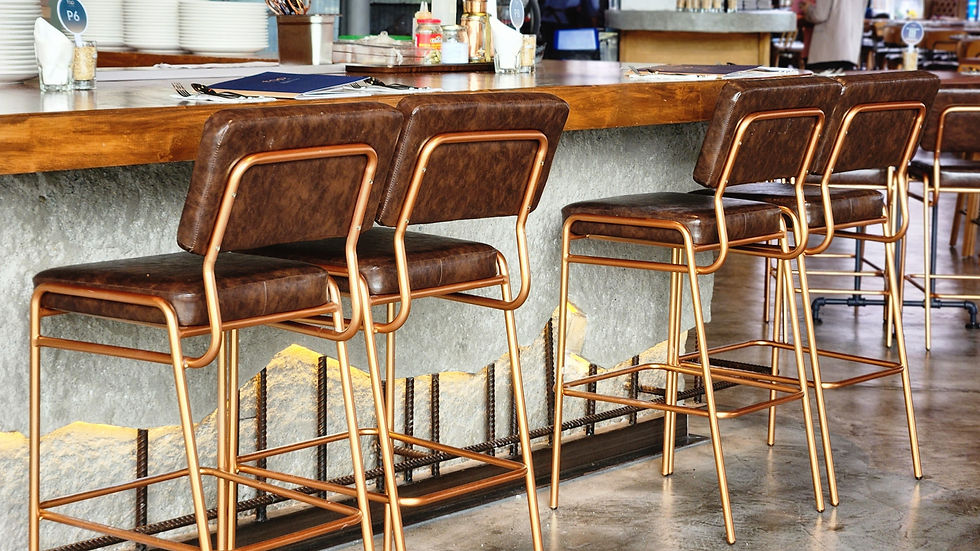
Bars and public dining environments introduce different demands again. Higher seating, shared tables and communal layouts may be part of the concept, but so are heavy traffic, late-night wear and uneven usage patterns. In food courts, furniture often has to suit multiple food brands while maintaining a cohesive overall look.
These projects usually benefit from a total-solutions approach, where furniture selection is coordinated with layout, accessories and site conditions rather than sourced piece by piece.
Why a total-solutions model reduces project risk
Many operators do not struggle because they lack furniture options. They struggle because too many decisions are spread across too many suppliers. One vendor handles tables, another handles chairs, another advises on layout, and someone else is expected to manage installation issues when they arise.
That fragmentation costs time. It also makes accountability less clear. If dimensions do not align, finishes vary, or lead times clash with opening deadlines, the operator is left coordinating the fixes.
A structured, end-to-end model is often the smarter commercial decision.
Professional advice at the front end helps align furniture selection with concept, floor plan and operating goals.
Specification support reduces the risk of mismatched products or underperforming materials.
Project management improves coordination, especially where multiple zones or outlet types are involved.
After-sales support matters too, because hospitality furniture is not static. Repairs, touch-ups and replacements are part of the lifecycle.
This is where a specialist partner brings real value. BAREKA by Kian, for example, approaches hospitality projects as a complete delivery exercise rather than a catalogue transaction. For operators opening, refurbishing or rolling out across locations, that single-source model can provide practical peace of mind.
The trade-offs that matter before you buy
No furniture decision is perfect in every category. The best outcomes usually come from understanding the trade-offs early.
Comfort and turnover are one example. Softer, deeper seating may improve dwell time and perceived quality, but it can reduce table turnover in formats that rely on volume. Lightweight furniture improves staff handling, but very light pieces can feel less stable in some settings. Premium finishes may strengthen brand impression, yet they must justify their maintenance and replacement profile.
Customisation is another area where balance matters. Bespoke furniture can create a stronger identity and improve fit, particularly for banquettes, counters or branded roll-outs. However, bespoke programmes need disciplined specification and realistic lead-time planning. Off-the-shelf products may move faster, but they can create compromises in consistency or functionality.
Outdoor use deserves the same level of scrutiny. A product described as suitable for outdoor settings may still perform differently depending on sun exposure, humidity, cleaning chemicals and storage conditions. In practice, local climate and site behaviour are just as important as the base material.
Planning for scale, not just opening day
A single-site launch and a multi-outlet roll-out are different challenges. For one venue, the priority may be concept fit and speed to open. For a growing brand, furniture decisions need to support repeatability, procurement control and brand consistency.
This is where standardisation becomes commercially useful. When core seating types, finishes and specifications are documented properly, operators can open new sites faster and maintain a more consistent guest experience. Procurement becomes easier, maintenance is simpler to manage, and replacement planning becomes less reactive.
That does not mean every site should be identical. Local adaptation may be necessary due to floor area, customer mix or landlord conditions. But there should still be a coherent framework behind the selections. Restaurant furniture solutions are strongest when they can flex by site without losing operational discipline.
What decision-makers should ask before committing
Before placing an order, it is worth pressure-testing the brief.
Will the furniture still perform after a year of peak-period use?
Can the finishes be maintained by the site team without specialist treatment?
Are replacement parts or matching future orders realistic?
Does the layout support both revenue and service flow?
These questions are less glamorous than colour boards, but they are usually more important.
The right supplier should be able to answer them clearly. Not with vague assurances, but with hospitality-specific guidance based on venue type, usage level and project scope. That consultative step is often what separates a smooth opening from a costly series of corrections.
Restaurant furniture is one of the most visible parts of a venue, but its real value is in how quietly it supports the business every day. When the specification is right, guests notice the atmosphere, staff move efficiently, and operators spend less time fixing preventable problems. That is the kind of solution worth investing in.


Comments