
Turnkey Fit Out vs Piecemeal Sourcing for Restaurants

Updated: Aug 6
A restaurant fit out rarely fails because someone chose the wrong chair. It fails when furniture, finishes, lighting, equipment interfaces and delivery schedules stop lining up. The decision between turnkey fit out vs piecemeal sourcing determines who carries that coordination burden - and how much risk sits with your internal team.
For a first site, a refurbishment or a multi-location roll-out, neither route is automatically right. The better choice depends on the strength of your project team, the complexity of the concept, the required opening date and how much control you need over every supplier decision.
What a turnkey fit out means in hospitality
A turnkey fit out places responsibility for a defined scope with one specialist partner. For F&B operators, that can include concept input, furniture planning, product specification, manufacturing or sourcing, accessories, delivery, installation, project coordination and after-sales support.
The term does not mean the operator gives up all control. A well-managed turnkey project starts with clear approvals: layout, material palette, furniture samples, budgets, lead times and site requirements. The difference is that, once decisions are approved, one accountable partner manages the flow of work across the agreed scope.
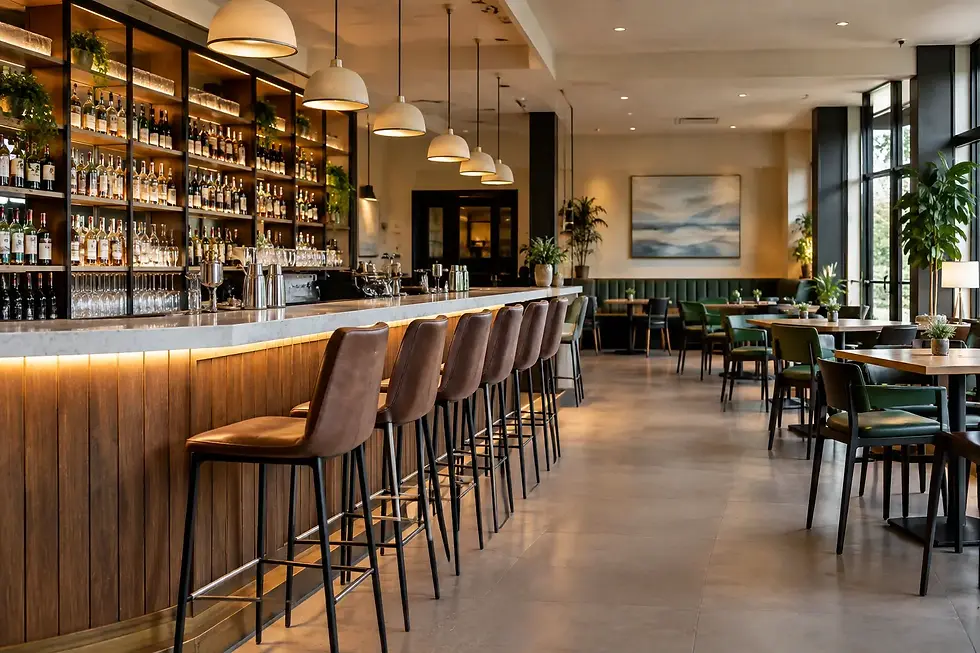
This approach is particularly useful where the furniture package must work as part of the operation. Table sizes affect covers and circulation. Upholstery choices affect cleaning routines. Outdoor pieces must withstand weather exposure. Banquette dimensions, bar stool heights and queue-line furniture all influence the guest experience and staff movement.
A specialised F&B fit-out partner sees these connections early. That reduces the risk of attractive products arriving on site only to prove impractical for service, maintenance or the available space.
What piecemeal sourcing involves
Piecemeal sourcing means appointing separate suppliers for different parts of the project. An operator might buy tables from one manufacturer, seating from another, lighting from a third supplier and decorative accessories through a separate procurement route. The interior designer, contractor or client team then coordinates specifications, orders, deliveries and installation.
This model can work very well for experienced operators with a capable internal procurement and project team. It may also suit a venue with a highly specific design brief, where individual pieces are central to the concept and the team has time to source them carefully.
The attraction is apparent control. Each item can be compared across suppliers, negotiated independently and selected for a particular look or price point. However, control only delivers value when someone has the capacity to manage the consequences: inconsistent lead times, changing dimensions, fragmented warranties, delivery clashes and substitutions when stock is unavailable.
Turnkey fit out vs piecemeal sourcing: the practical differences
The choice is not simply about buying from one supplier or many. It is a decision about accountability, programme certainty and the cost of managing exceptions.
Cost: compare the total project cost, not unit prices
Piecemeal sourcing can appear less expensive when quotes are compared item by item. A buyer may find a lower chair price from one supplier or a cheaper table base elsewhere. Yet the purchase price is only one part of the cost.
Separate suppliers can introduce additional freight, handling, storage, site coordination and installation charges. More significantly, internal time has a cost. When a delivery is late, a fabric is discontinued or a product does not fit through the entrance, someone must resolve it. Delays can also affect contractor sequencing and, ultimately, the opening date.
A turnkey quotation may not always be the lowest on every individual line. Its value lies in a clearer overall budget and a single party responsible for managing the agreed package. For operators prioritising predictable expenditure and fewer surprises, that can be commercially stronger than chasing the lowest initial price.
Speed: one programme is easier to manage than several
Opening dates matter in hospitality. Rent, staffing, marketing and inventory commitments often begin before the first guest arrives. A late furniture package can hold back inspections, staff training, photography and launch activity.
With piecemeal sourcing, every supplier has its own production schedule, stock position and delivery process. One missing element can prevent a section of the venue from being completed. This is manageable, but it demands disciplined programme management and frequent follow-up.
A turnkey provider builds the furniture package around one coordinated delivery and installation plan. There may still be supply-chain constraints, particularly for custom items, but responsibility for monitoring and escalation sits with the delivery partner. For a fast QSR opening or a phased restaurant roll-out, this concentration of accountability can protect the programme.
Design consistency: cohesion needs specification discipline
A distinctive venue does not require every item to come from the same factory. It does require consistency in proportions, finishes, comfort and durability. A timber tone that looks right in a sample can clash with flooring under the venue lighting. A chair may complement the mood board but sit too low for the selected dining tables.
Piecemeal sourcing gives designers broad freedom, but it also relies on close specification control. Samples must be reviewed together, measurements verified and substitutions assessed against the whole scheme.
A turnkey approach provides a single point of coordination across the furniture and accessory package. It is especially effective for restaurant groups that need a recognisable format across multiple locations while allowing sensible adaptations for each site. Standardised specifications also make future replacement orders more straightforward.
Quality and durability: hospitality use changes the equation
Commercial furniture is judged after months of service, not on delivery day. In busy cafés, bars and food courts, products face frequent cleaning, moving, impact, heat, spills and heavy guest turnover. Domestic-grade products may look suitable but can create avoidable repair and replacement costs.
When sourcing piecemeal, the buyer must assess each supplier’s commercial suitability, warranty conditions, spare-part availability and material performance. That diligence is worthwhile, but it takes time and technical knowledge.
With a hospitality-focused turnkey partner, furniture selection is aligned with actual operating conditions. The objective is not merely to fill a floor plan. It is to specify products that support cleaning, guest comfort, staff access and long-term presentation. Ongoing maintenance and repair support can also be planned rather than treated as an afterthought.
When piecemeal sourcing is the better choice
Piecemeal sourcing remains a sensible option in the right circumstances. It can suit an established operator with an in-house design, procurement and project-management function; a project with a long programme and no pressing opening deadline; or a flagship venue where rare, bespoke or independently sourced pieces are essential to the brand story.
It may also be appropriate where the fit out scope is narrow. Replacing a small number of tables and chairs in an operating café is not the same as delivering a new restaurant from shell condition. A full-service package would be unnecessary if the requirement is simple and the specifications are already settled.
The key is to be realistic about management capacity. Supplier fragmentation is not inherently a problem. Unmanaged fragmentation is.
When a turnkey approach delivers stronger value
Turnkey delivery is usually the stronger route when the project has multiple moving parts, a firm launch date or limited internal resource. It is particularly valuable for new operators opening their first venue, restaurant groups expanding into several sites, developers fitting out food courts, and brands seeking consistent customer experience across a portfolio.
It also supports clearer decision-making. Rather than coordinating separate conversations about tables, seating, finishes, logistics and installation, the operator works through one integrated plan. BAREKA by Kian applies this total-solutions approach to help F&B businesses move from concept and specification through to implementation and ongoing support.
That does not remove the need for operator involvement. The best outcomes still come from timely approvals, accurate site information and a clear brief. What it removes is the need for the operator to act as the daily link between every furniture supplier, contractor and delivery team.
Make the decision before you start requesting quotes
Before choosing either model, define the scope, target opening date, approval process, budget range and the person responsible for final decisions. Then assess the project honestly: do you have the internal time and technical knowledge to coordinate several suppliers, inspect specifications and manage site issues as they arise?
If the answer is yes, piecemeal sourcing may provide the flexibility you want. If the answer is no, a turnkey fit out is not a loss of control. It is a practical way to retain control of the decisions that matter while placing delivery responsibility with a specialist partner.
The most useful test is simple: choose the route that lets your team spend less time chasing furniture and more time preparing a venue that is ready to serve guests well from day one.


Comments