
Restaurant Furniture Buying Guide for Operators

Updated: May 28

Opening a restaurant with the wrong furniture is an expensive lesson. Seats wear out too quickly, table sizes slow service, layouts reduce covers, and the space starts working against the operation. This restaurant furniture buying guide is built for operators, procurement teams and project decision-makers who need furniture that supports service, protects margin and stays consistent with the brand.
Furniture decisions are rarely just about appearance. In hospitality, every table, chair, bar stool and banquette affects turnover speed, staff movement, cleaning routines, guest comfort and replacement costs. A good buying decision improves day-to-day performance. A poor one creates friction that shows up in labour, maintenance and lost revenue.
Start with the operating model, not the catalogue
The best restaurant furniture buying guide begins with a simple principle: buy for the venue you are running, not the image you have in mind.
A fine dining room, a high-volume café, a quick-service restaurant and a food court all place different demands on furniture.
If guests stay for ninety minutes, comfort matters differently than it does in a thirty-minute turnover environment.
If the concept relies on delivery and takeaway, front-of-house seating may need less emphasis than waiting areas, bar ledges or flexible two-top arrangements.
If the site is inside a mall or transport-linked location, cleaning frequency, movement patterns and durability become more critical than decorative detail.
This is where many projects lose efficiency. Buyers choose furniture in isolation, then try to make the operation fit around it. It works better the other way round. Start by defining expected footfall, average dwell time, service style, cleaning schedule and target covers. Once those are clear, furniture specification becomes far more precise.
Restaurant furniture buying guide: what to prioritise first
For most operators, there are five priorities to balance: durability, comfort, spatial efficiency, brand fit and budget. The order matters, but not always in the same way.
Durability should usually come first because hospitality furniture faces heavier use than residential or general commercial settings. Chairs are dragged, tables are cleaned repeatedly, edges take impact, and finishes deal with spills, heat and constant contact. The right material and construction can significantly extend replacement cycles.
Comfort matters, but it should match the venue type. Too much cushioning can be impractical in fast-turnover formats. Too little support can shorten dwell time in places where customers are expected to stay and spend. The right choice depends on whether you want guests to settle in, dine efficiently or move through quickly.
Spatial efficiency is often undervalued at the buying stage. A chair that looks right on a sample floor may take up too much room when multiplied across a full layout. Table bases may clash with legroom. Banquettes can save space, but only if dimensions are properly planned. Every centimetre affects circulation, accessibility and revenue potential.
Brand fit should support the concept without overriding commercial sense. Distinctive furniture can strengthen identity, but if it is difficult to maintain or impossible to standardise across locations, it may create problems later. Budget matters, of course, but lowest upfront cost is not the same as best value. In most hospitality environments, lifecycle cost is the better measure.
Choosing materials that can handle hospitality use
Materials should be selected with cleaning, wear and traffic in mind.
Timber brings warmth and character, but different species and finishes perform differently under constant use. Solid timber can be durable and repairable, while veneer may suit certain applications but needs more careful treatment in heavy-use settings.
Metal frames are often a practical option for cafés, bars and quick-service concepts because they offer strength and consistency. Powder-coated finishes can work well, though specification matters if the site is exposed to moisture or frequent abrasion.
Upholstered seating adds comfort and perceived value, but fabric choice needs discipline. In many restaurant environments, easy-clean commercial upholstery or treated surfaces are the safer route.
Table tops deserve particular attention because they take the most visible daily impact. Heat resistance, stain resistance and edge durability all matter. A top that chips or marks quickly will date the venue far faster than most operators expect. Outdoor areas require another level of scrutiny, especially in humid or rainy conditions where corrosion, fading and water exposure become key risks.

Layout, capacity and guest flow
Furniture should never be bought before the floor plan is tested properly. Capacity targets are important, but pushing too many seats into a layout can compromise service speed and guest experience. Staff need clear routes. Guests need comfortable spacing. Delivery to the table, clearing and cleaning all depend on movement being easy and repeatable.
Two-top and four-top flexibility is often useful, particularly for casual dining and café formats. Modular arrangements can help operators adapt to changing party sizes without disrupting the space. Banquettes can improve seat count along walls, but if seat height, table height and access are not correctly aligned, comfort suffers.
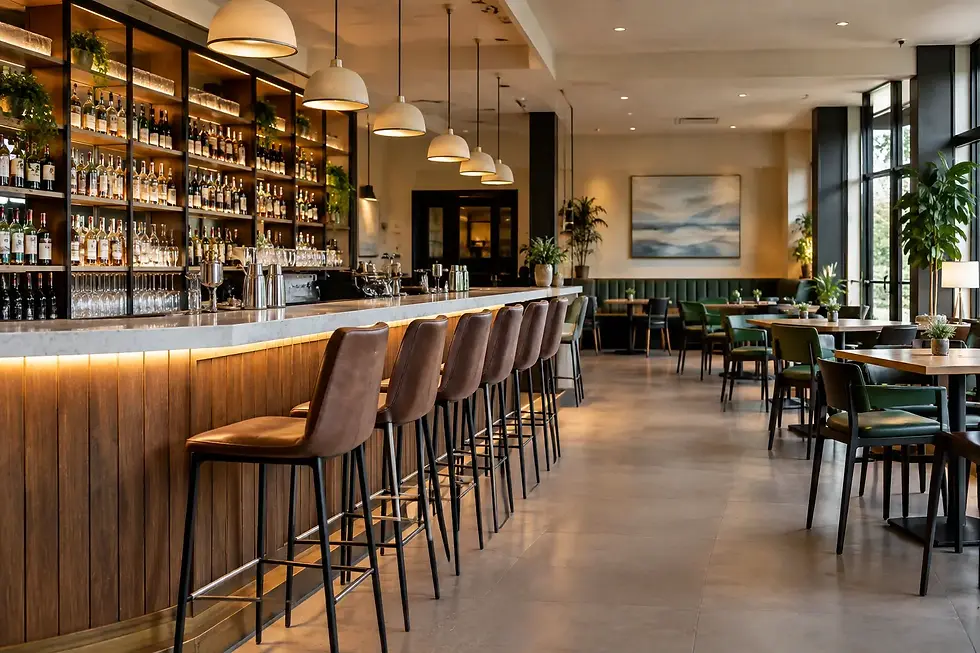
Bar seating, waiting areas and outdoor spillover spaces also need strategic planning. These zones can increase usable capacity and improve customer flow, but only when the furniture is chosen with clear intent. A stool that is acceptable for a short dwell time may not suit a venue where customers linger over drinks. It depends on the trading pattern.
Standardisation matters more than many buyers expect
Single-site operators tend to focus on launch. Multi-site operators need to think beyond it. If expansion, refurbishment or replacement is likely, standardisation becomes commercially valuable. Matching finishes, dimensions and product lines across outlets simplifies procurement, supports brand consistency and reduces the risk of piecemeal replacements.
This is where working with a hospitality-focused furniture partner can save time and money. Instead of sourcing tables from one supplier, seating from another and repair support elsewhere, a total-solutions approach gives buyers better control over specification, lead times and long-term maintenance. For growing brands, that consistency is often more valuable than chasing fragmented short-term savings.
Don’t treat lead times as an afterthought
Furniture delays can hold up handover, staff training and opening dates. That turns a product decision into an operational and financial problem. Lead times need to be discussed early, especially for custom finishes, imported components or larger rollouts.
There is always a trade-off between customisation and speed. Bespoke pieces can sharpen the concept, but they require tighter planning and clearer approvals. Standard ranges can reduce risk, though they may offer less visual distinction. The right balance depends on the project timeline, budget pressure and brand requirements.
For refurbishment projects, phasing is equally important. If the venue remains operational during replacement works, furniture needs to be delivered and installed in a way that limits disruption. That requires project coordination, not just product supply.
Budget properly by looking at total cost
A chair that costs less upfront but fails within a year is rarely a saving. The same applies to finishes that show wear too quickly or table bases that loosen under regular use. When reviewing options, consider purchase cost alongside maintenance, replacement frequency, repairability and downtime.
This is especially relevant for high-volume venues. Heavy-use sites can justify stronger specifications because the furniture is under constant pressure. Lower-traffic venues may have more flexibility, but even then, maintenance should not be ignored. Commercial furniture should be chosen as an operating asset, not a decorative expense.
A dependable supplier should be able to advise where to spend and where to save. Not every zone needs the same level of specification. Dining areas, waiting spaces, bar counters and outdoor terraces often have different performance requirements. Aligning furniture quality to actual use is a more efficient approach than over-specifying everything or under-specifying the most demanding zones.

The value of after-sales support
Furniture buying does not end at installation. Hospitality operators benefit from maintenance guidance, repair support and practical advice on preserving appearance over time. This becomes even more important for chains, public-facing venues and projects with high utilisation.
A supplier with structured after-sales support offers more than convenience. It gives operators peace of mind that issues can be resolved without starting the sourcing process again from scratch. For many businesses, that operational confidence is worth as much as the initial product specification.
BAREKA by Kian works with this reality in mind, combining furniture supply with professional advice, project coordination and ongoing support for hospitality environments that need to perform consistently.
Questions to ask before placing the order
Before committing, ask whether the furniture suits the service model, whether dimensions have been tested against the actual floor plan, whether materials are appropriate for cleaning and wear, and whether replacements can be sourced later.
Confirm warranties, maintenance expectations and realistic delivery timelines.
It is also worth checking how the furniture will age visually. Some concepts benefit from natural wear. Others need a cleaner, more uniform presentation over time.
The right answer depends on the brand, the customer base and how often the site is refreshed.
Good restaurant furniture does not simply fill a space. It supports service, protects the concept and helps the business run with fewer avoidable problems. Buy with the operation in mind, and the furniture will keep working long after opening week.


Comments